
Branding Beyond Paper: Using Aprons as Marketing Tools
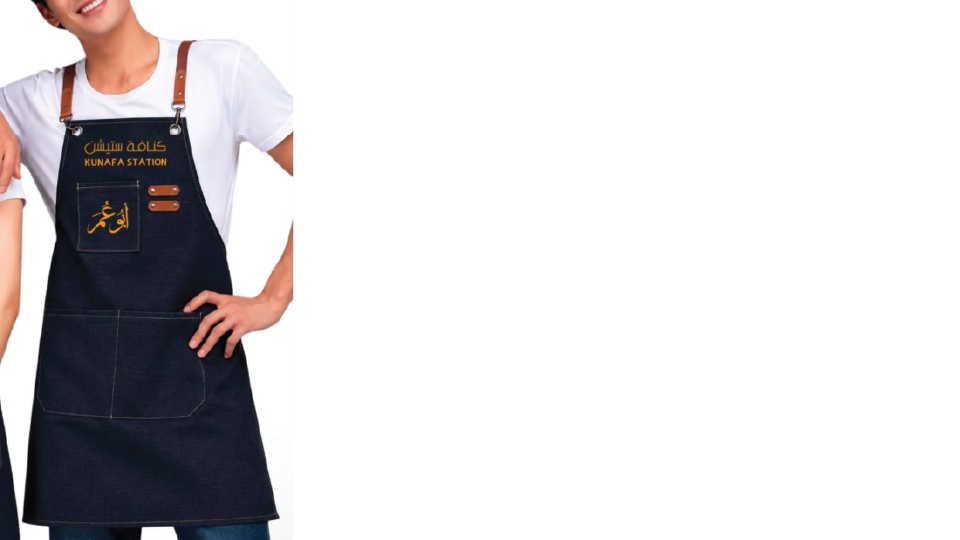
Branding Beyond Paper: Using Aprons as Marketing Tools
In today’s competitive business environment, branding goes far beyond logos, business cards, brochures, and social media graphics. Every interaction a customer has with a business can become an opportunity to reinforce its identity. From packaging and signage to staff uniforms and the way employees present themselves, each visual touchpoint contributes to how customers recognize and remember a brand.
One of the most practical and often overlooked branding tools is the apron.
For restaurants, cafés, bakeries, hotels, catering companies, food trucks, specialty stores, and many customer-facing businesses, branded aprons can turn everyday workwear into a powerful marketing asset. A well-designed apron featuring a company logo through professional embroidery can help employees look more organized, create a consistent team appearance, and keep the brand visible throughout the customer experience.
This is where apron branding becomes more than simply adding a logo to a uniform. It becomes part of a broader visual marketing strategy.
Whether you are launching a new restaurant, refreshing an existing brand identity, opening a café, or looking for a more professional staff uniform, custom aprons can provide a practical way to take your branding beyond traditional printed materials.
What Is Apron Branding?
Apron branding is the process of incorporating a company’s visual identity into an apron used by employees or staff. This may include the business logo, company name, brand colors, tagline, or other visual elements associated with the brand.
One of the most popular methods of apron branding is logo embroidery.
Instead of printing the logo onto the fabric, embroidery uses thread to create the design directly on the apron. This can produce a professional, durable, and premium-looking finish that works particularly well for businesses where staff members interact directly with customers.
Apron branding can be used in different ways depending on the business and its visual identity.
A restaurant might place a small embroidered logo on the left chest area. A specialty coffee shop might use a larger central logo. A bakery may combine its logo with a simple brand element or business name.
The objective is not necessarily to make the logo as large as possible. Effective branding often comes from choosing the right size, position, colors, and overall design.
Why Aprons Can Become Powerful Marketing Tools
Marketing is often associated with advertisements, social media campaigns, printed flyers, and promotional materials. However, customers also notice the people representing a business.
Employees are often among the most visible elements of a customer-facing company.
When staff members wear consistent, branded aprons, the business gains another opportunity to communicate its identity.
A customer entering a café may see the brand logo on the sign, menu, coffee cup, packaging, and employee apron. These repeated visual impressions help create a more consistent brand experience.
This is one of the key advantages of branded uniforms.
They are not only functional workwear. They can also become part of the visual language of the business.
A branded apron can communicate:
Professionalism
Consistency
Brand identity
Attention to detail
Organization
Recognition
Customer-facing professionalism
The apron itself may be a simple product, but when used consistently, it becomes part of the brand environment.
Branding Beyond Paper
Traditional printed materials remain important for businesses.
Business cards, flyers, brochures, menus, packaging, posters, and other printed materials can all contribute to a strong visual identity.
However, a brand does not exist only on paper.
Customers experience brands through physical environments, employees, products, packaging, websites, social media, and many other touchpoints.
This is why businesses should think about branding beyond paper.
A restaurant may have a beautifully designed menu, but the employees serving customers also contribute to the overall experience.
A café may have a strong social media presence, but the barista wearing a branded apron becomes a real-world representation of that brand.
A bakery may have attractive packaging, but its staff uniforms can reinforce the same identity inside the store.
When these elements work together, branding becomes more consistent.
The goal is to create a visual connection between different customer touchpoints.
Embroidered Aprons vs. Printed Aprons
When branding aprons, businesses typically consider different customization methods.
Two common options are embroidery and printing.
Embroidery on aprons creates the logo using stitched thread, while printing applies the design onto the fabric surface.
The right choice depends on the brand, apron material, design complexity, budget, and intended use.
Embroidery is often chosen when the business wants a more premium and durable appearance.
It can work particularly well with:
Restaurants
Cafés
Bakeries
Hotels
Catering companies
Specialty food stores
Barbershops
Retail businesses
Hospitality businesses
Printed aprons can also be useful, especially when the design contains larger graphics, gradients, photographs, or visual elements that are not suitable for embroidery.
However, for a simple business logo, embroidery can provide a clean and professional result.
The Benefits of Embroidery on Aprons
1. Professional Appearance
A professionally embroidered logo can give an apron a polished appearance.
For customer-facing businesses, this can help create a more organized and professional presentation.
A clean logo positioned correctly on an apron can look more refined than an oversized or poorly positioned graphic.
2. Long-Lasting Branding
Employees may wear their aprons for many hours and wash them regularly.
This means the branding method needs to be suitable for frequent use.
Embroidery is a practical option because the logo becomes part of the fabric through stitching rather than simply sitting on the surface as an applied graphic.
For businesses with frequent uniform washing and daily staff use, durability can be an important consideration.
3. Strong Brand Recognition
Repeated exposure can help customers recognize a brand.
When the same logo appears on:
Aprons
Menus
Packaging
Cups
Signage
Business cards
Social media
the customer encounters a consistent visual identity across multiple touchpoints.
This consistency can make the brand easier to recognize.
4. A Premium Look
Embroidery can create a textured appearance that adds visual depth to a simple apron.
For premium cafés, restaurants, bakeries, and hospitality brands, this can complement a carefully designed visual identity.
The quality of the embroidery should, of course, match the overall quality of the brand.
Choosing the Right Apron for Your Brand
The apron itself is part of the branding decision.
Before choosing an apron, businesses should consider the material, color, style, length, functionality, and overall appearance.
A modern specialty coffee shop may prefer a minimalist dark apron.
A bakery may choose a lighter and more approachable color.
A premium restaurant may prefer a sophisticated apron style that complements the interior design.
The goal is to choose an apron that fits naturally into the brand environment.
Important considerations include:
Apron Color
The apron color should work with the company’s brand colors.
A logo needs sufficient contrast to remain visible.
Fabric
The fabric should be appropriate for the working environment.
Restaurant and kitchen environments may require different materials from retail or hospitality environments.
Style
The apron style should reflect the business personality.
Minimalist, modern, traditional, premium, casual, or industrial styles can communicate different impressions.
Logo Placement
The position of the logo can have a major effect on the final appearance.
Common positions include:
Left Chest
Right Chest
Center Chest
Upper Center
Pocket Area
The best placement depends on the apron design and the logo itself.
How to Prepare a Logo for Apron Embroidery
Not every digital logo is automatically ready for embroidery.
Embroidery requires the artwork to be converted into a format that determines how the machine will create the stitches.
A logo that looks perfect on a website may contain very small details, thin lines, or complex elements that need adjustment before embroidery.
Before producing embroidered aprons, businesses should review:
Logo Size
Stitch Density
Thread Colors
Fine Details
Line Thickness
Fabric Type
Placement
Overall Proportion
A simplified logo may sometimes produce a better embroidered result than a highly detailed version.
This is particularly important for small embroidery areas.
The goal is to preserve the identity of the logo while adapting it to the physical limitations of embroidery.
Apron Branding for Restaurants
Restaurants are one of the most suitable environments for branded aprons.
Employees are visible throughout the customer journey, from welcoming guests to serving food and handling orders.
A consistent apron design can help create a unified appearance across the team.
For restaurants, apron branding can be applied to:
Chefs
Waiters
Servers
Hosts
Counter Staff
Bar Staff
Kitchen Staff
The logo does not need to dominate the apron.
A small, well-positioned embroidered logo can often communicate the brand effectively while maintaining a professional appearance.
For restaurants with multiple locations, using consistent apron designs can also help create visual consistency across branches.
Apron Branding for Cafés and Coffee Shops
Coffee shops are highly visual businesses.
Customers often interact with baristas while ordering and receiving their drinks, making staff uniforms an important part of the customer experience.
A branded barista apron can complement:
Coffee Cups
Menu Boards
Packaging
Store Signage
Social Media
Loyalty Cards
Product Labels
A consistent color palette and logo placement can create a recognizable environment.
For specialty coffee brands, apron design can also contribute to the overall aesthetic of the shop.
Minimal branding may communicate a premium or modern identity, while stronger graphics may suit a more casual or youthful brand.
Apron Branding for Bakeries
Bakeries can benefit from branded aprons because employees are often visible behind counters and in open preparation areas.
A well-designed apron can reinforce the bakery’s identity while providing practical protection for employees.
The logo can be embroidered on the chest area, while the apron color can be selected to complement the bakery’s packaging and interior design.
For bakeries with a strong visual identity, the apron can become another recognizable element of the customer experience.
Apron Branding for Hotels and Hospitality Businesses
Hospitality businesses often require a high level of visual consistency.
Hotels, catering companies, event businesses, and hospitality brands may have employees working across different customer-facing areas.
Branded aprons can be useful for:
Catering Teams
Coffee Stations
Breakfast Service
Events
Food Preparation
Guest Service Areas
The branding should fit the overall hospitality environment and maintain a professional appearance.
In premium hospitality settings, subtle embroidery and carefully selected materials may work better than large promotional graphics.
Aprons as Mobile Brand Exposure
One of the interesting aspects of branded uniforms is that employees can move around.
Unlike a fixed sign, an apron can be visible in different parts of a store, restaurant, event, or customer environment.
This makes branded aprons a form of mobile brand exposure.
An employee serving customers at a table, preparing coffee behind a counter, or working at an event may be seen by many people throughout the day.
The logo moves with the employee.
This does not replace traditional advertising, but it can complement other marketing activities by increasing the number of physical brand touchpoints.
Creating a Consistent Brand Experience
A strong brand experience depends on consistency.
Imagine a café with:
A black and gold logo
Minimalist packaging
Elegant menus
Modern signage
Professional social media graphics
Black embroidered aprons
Each element communicates the same visual language.
Now imagine the same café using completely different colors and styles across each touchpoint.
The brand may feel less organized even if every individual item is professionally produced.
This is why apron branding should be considered as part of the wider visual identity rather than as an isolated uniform decision.
The Role of Color in Apron Branding
Color is one of the strongest visual components of a brand.
When selecting an apron, businesses should consider how the fabric color interacts with the logo and thread colors.
For example, a light logo on a dark apron can create strong contrast, while dark embroidery may work better on a lighter fabric.
However, contrast is not the only consideration.
The colors should also match the brand’s existing visual identity.
Consistency across:
Aprons
Packaging
Menus
Signage
Social Media
Website
can make the brand easier to recognize.
Minimalist Apron Branding
More branding does not necessarily mean better branding.
A common mistake is trying to place too many elements on an apron.
The logo, business name, phone number, website, social media handles, slogan, and multiple graphics may make the design crowded.
For most staff uniforms, simplicity is more effective.
A clean logo in the right position can communicate the brand without making the apron look like an advertisement.
A minimalist approach can also create a more premium appearance.
Custom Aprons for Different Brand Personalities
Different businesses have different personalities.
A luxury restaurant may want an elegant and understated apron.
A modern coffee shop may prefer a minimalist design.
A colorful bakery may use a brighter visual identity.
A street-food business may choose a bold and energetic look.
Custom aprons allow businesses to adapt their uniforms to their specific brand personality.
The important thing is to ensure that the apron design feels connected to the rest of the brand.
Branded Aprons and Customer Trust
Professional presentation can influence how customers perceive a business.
Clean and consistent uniforms can contribute to an organized customer-facing environment.
While an apron alone cannot determine customer trust, it can support the overall impression created by the business.
When staff members look consistent and the branding is professionally executed, customers may find it easier to identify who works for the business.
This can be particularly useful in busy environments such as restaurants, cafés, events, and retail stores.
Using Aprons in Marketing Campaigns
Branded aprons do not have to be limited to everyday uniforms.
Businesses can also create special apron designs for:
Product Launches
Events
Pop-Up Stores
Food Festivals
Seasonal Campaigns
Brand Activations
Promotional Events
For example, a company launching a new product could create a temporary apron design featuring the campaign identity.
This can help connect the physical staff experience with the marketing campaign.
However, temporary designs should still maintain a clear connection to the main brand.
Social Media and Branded Aprons
Modern branding often exists both offline and online.
Staff wearing branded aprons may appear in:
Instagram Reels
TikTok Videos
Product Photography
Behind-the-Scenes Content
Promotional Videos
Customer Photos
Event Content
This creates another reason to pay attention to apron design.
The apron may appear repeatedly in photographs and videos, making it part of the brand’s visual content.
A clean and recognizable embroidered logo can therefore contribute to the visual consistency of social media content.
How to Make an Embroidered Apron Look Professional
Several details can improve the final appearance.
Use the Correct Logo Version
Always use the approved brand logo and avoid using low-resolution or outdated versions.
Choose the Correct Size
The logo should be large enough to be recognizable but not so large that it overwhelms the apron.
Use Appropriate Thread Colors
Thread colors should provide enough contrast while remaining consistent with the brand identity.
Choose the Right Placement
The logo should be positioned where it is clearly visible without interfering with the apron’s practical functions.
Test Before Bulk Production
If the business is ordering a large quantity, producing a sample first can help identify potential issues before full production.
This can save time and reduce unnecessary costs.
Common Mistakes in Apron Branding
Businesses can make several mistakes when creating branded aprons.
Using an Oversized Logo
A large logo is not automatically more effective.
Using Too Many Colors
Too many thread colors can make the design unnecessarily complicated.
Ignoring the Fabric
The same embroidery design may behave differently on different fabrics.
Choosing Poor Contrast
If the thread color is too similar to the apron color, the logo may become difficult to see.
Skipping a Sample
Testing a sample before placing a large order can help identify issues with sizing, placement, or thread colors.
Using an Unoptimized Logo
Digital artwork may need to be adapted for embroidery.
From Printed Branding to Wearable Branding
Traditional marketing materials remain important, but modern brands need to think about every customer touchpoint.
A business card stays in a customer’s wallet.
A flyer may be taken home.
Packaging may remain with the customer.
A sign remains visible in a physical location.
A branded apron moves with the employee.
Each of these elements can contribute to brand recognition.
This is the real idea behind Branding Beyond Paper.
The brand should not disappear when the customer puts down the brochure.
It should continue to exist through the environment, employees, packaging, products, and customer experience.
Building a Complete Branded Uniform System
For businesses with multiple employees, it can be useful to establish simple uniform guidelines.
These may include:
Approved Apron Style
Approved Logo
Logo Placement
Embroidery Size
Thread Colors
Apron Colors
Staff Uniform Rules
Replacement Guidelines
This helps ensure consistency as the team grows.
If a company opens another branch, the same specifications can be used to reproduce the uniforms.
This is particularly useful for growing restaurant and café brands.
Why Businesses Should Invest in Branded Aprons
An apron is already a functional item for many businesses.
Adding professional branding does not require changing its primary purpose.
Instead, the business uses an existing uniform element as an additional branding opportunity.
The result can be:
Better Visual Consistency
Stronger Brand Recognition
More Professional Staff Appearance
Consistent Customer Experience
Greater Visibility
Stronger Brand Presentation
The investment should always be evaluated according to the business’s needs, staff size, apron usage, and branding strategy.
Conclusion: Turn Everyday Uniforms Into Brand Assets
Branding does not have to stop at printed materials.
Business cards, flyers, brochures, menus, packaging, and signage remain important, but businesses can strengthen their visual identity by extending branding into the physical customer experience.
Branded aprons provide a practical way to do this.
For restaurants, cafés, bakeries, hotels, catering companies, retail businesses, and other customer-facing brands, Embroidery on Aprons can create a professional and recognizable staff appearance.
The key is not simply adding a logo.
Effective apron branding requires the right apron, the right logo size, appropriate placement, suitable thread colors, and consistency with the overall brand identity.
When these elements are carefully planned, an everyday apron can become much more than workwear.
It can become a visible brand asset.
That is the real idea behind Branding Beyond Paper: Using Aprons as Marketing Tools — creating a brand that customers can see not only on paper or on a screen, but throughout the real-world experience of interacting with the business.